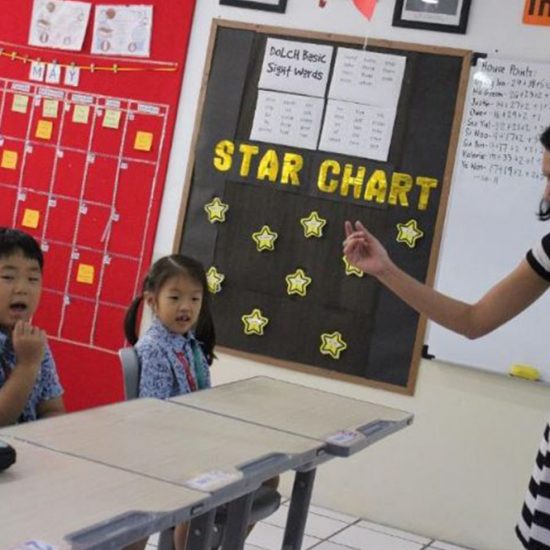

Instilling a Love of Writing Among Young Learners
Written by Ms Ramonita C. Sabalboro, Kindergarten 1& 2 Teacher

Ms. Ramonita has been inspiring young learners for more than 20 years
In this day and age, many students view writing as tedious, irrelevant, uninteresting and a waste of time. This is a pity for writing is an important form of communication and a key part in the education process. Sound writing skills build confidence and can contribute to coherence and unity in expressing one’s thoughts. Moreover, it is an essential skill that can greatly benefit students. Studies point to the fact that pupils who enhance their writing early on struggle less in terms of literacy and written communication. When a child learns to write a complete sentence at a young age, he/she will most likely apply the same principle in writing a paragraph.
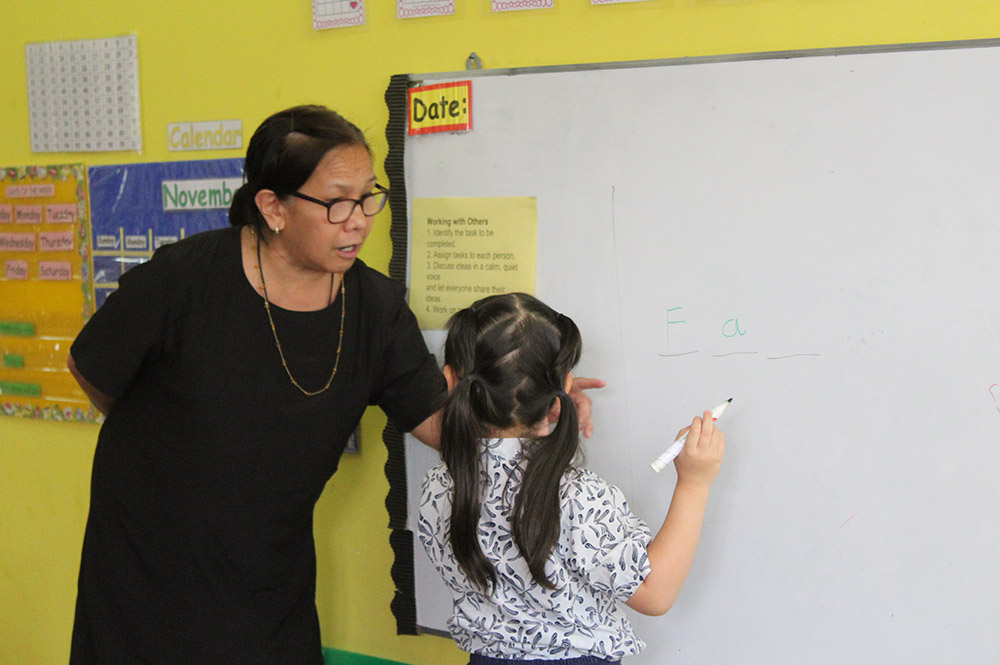
Parents can address this misconception by providing engaging avenues to enhance the writing ability of their children.
Below are some tips to get our kids to develop a lifelong love for writing :
- Read up! Read regularly to your child. The best writers are avid readers.
- Recognize, acknowledge and celebrate early writing. A child who attempts to tell a story through illustrations and talks about it is a form of writing. Even a picture with a single word under it is also writing tool. Celebrate it.
- Allow your child to see you write—whether it’s a grocery list, simple house rules, important reminders or a simple love note. A kid will most likely imitate what he sees more than what he is told.
- Provide young learners with authentic writing experiences. Encourage them to write anything and everything! Be it a To-Do list, preparing a simple menu for the day, a Thank You note or an invitation to a friend. Keeping a daily journal would likewise be great.
- Expose kids to varied writing genres such as rhymes, poems, directions for a game, even recipes and scrapbook entries.
- Create writing worksheets where children can trace , connect the dots, etc. Make use of other creative writing tools aside from pencils, markers and pens like paint brushes and finger prints.
- Have realistic expectations about grammar and spelling. Focusing too much on syntax and grammar rules can dampen creativity and enthusiasm among young writers. Hold them accountable only when you feel that their writing was carelessly done.
- Play word and story board games as a tool to teach writing skills.
- Ask your child to tell you stories as you write them down.
- Create a writing space/corner at home where a kid can write freely.
Give loving support and be genuinely interested in what your child writes about. Be more of an encourager and less of a critic.