Singapore Intercultural School High School Students Get to Know the Constitutional Court Up Close

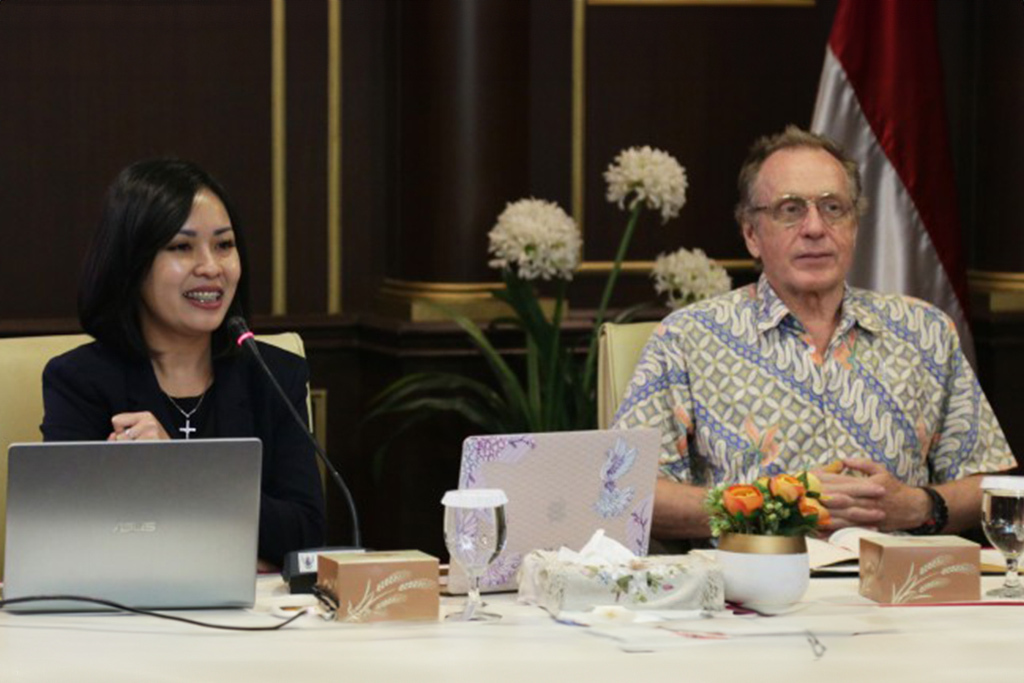
JAKARTA, MKRI Public Relations – A group of students from Singapore Intercultural School (SIS) Kelapa Gading visited the Constitutional Court on Tuesday (3/9/2024). The students were warmly welcomed by Constitutional Court Assistant Expert Mery Christian Putri in the MK Delegation Room. In a presentation titled “Indonesian Constitutional Court: Its History, Authority, and Function,” Mery invited the students to get to know the Constitutional Court more closely.
Mery began by recounting the history of judicial review, starting with the James Madison vs Marbury case in 1803, the establishment of the Constitutional Court in Austria in 1920, and the birth of the Constitutional Court in Indonesia.
It was explained that in Indonesia, the concepts of John Marshall and Hans Kelsen were implemented through the establishment of the Indonesian Constitutional Court (MKRI) on August 13, 2003. Based on the third amendment of the 1945 Constitution, MK, under Article 24C of the 1945 Constitution, became part of the judiciary in Indonesia. The Constitutional Court has the authority to review laws against the Constitution; resolve disputes over authority between state institutions whose authority is granted by the Constitution; decide on the dissolution of political parties; and adjudicate disputes regarding the results of general and regional elections.
Mery also introduced the students to the mechanism for submitting cases to the Constitutional Court. She explained that every Indonesian citizen can easily and affordably submit a petition to the Court. The petition can be submitted online and/or directly to the Court, and it is possible to proceed without being accompanied by a lawyer.
“As a modern court, the Constitutional Court provides several facilities to make it easier for the public to seek justice. One of these is ‘Simpel,’ an electronic petition information system that can be accessed from anywhere and is free of charge, ensuring that all Indonesians can obtain justice,” Mery explained.
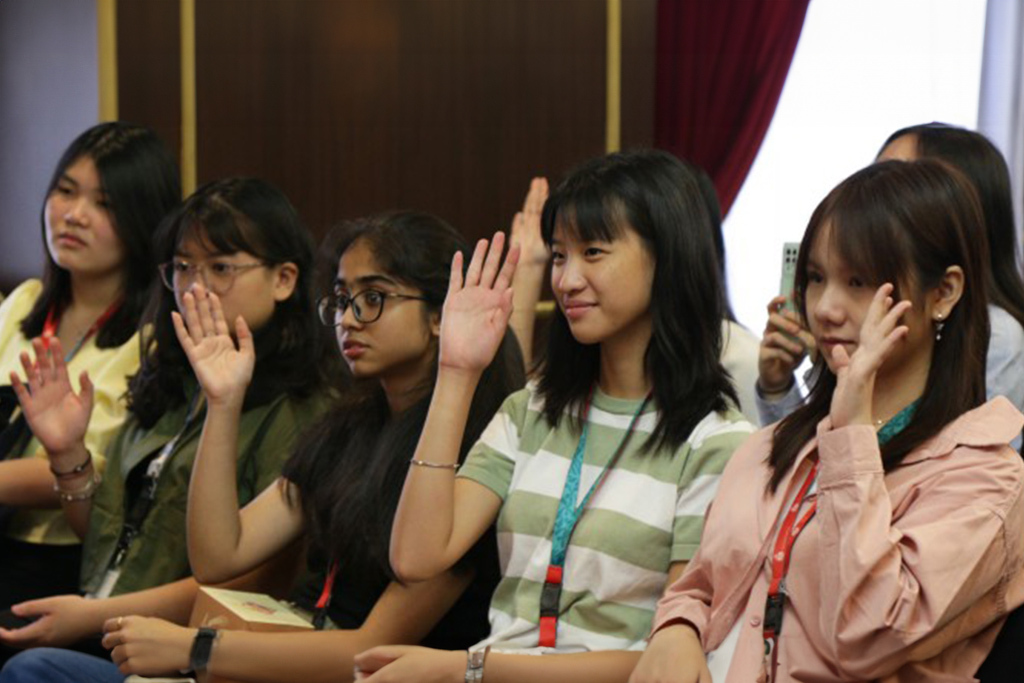
While presenting this material, Mery invited the students to ask questions and discuss the role of the Constitutional Court. The students were also introduced to the Court’s environment with a visit to the Constitutional Court’s History and Constitution Center. Additionally, they had the opportunity to attend a hearing for Case Number 115/PUU-XXII/2024, which involved a review of Article 310 paragraph (3) of the Criminal Code and Article 45 paragraph (7) of Law Number 1 of 2024 regarding the Second Amendment to Law Number 11 of 2008 on Electronic Information and Transactions (ITE Law), directly in the Constitutional Court’s Plenary Session Room.
Writer: Sri Pujianti
Editor: Lulu Anjarsari P.
Source: