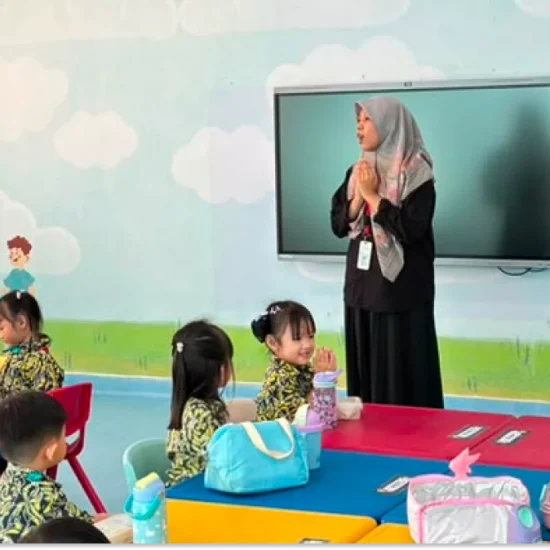

Making Science Come Alive with the IFP
Written by: Miss Yulia
Primary Science Teacher at SIS Palembang
Teaching Science to primary students can be challenging, especially when the topic is something they cannot see or touch. One example is the Solar System. Students can learn the names of the planets from a textbook, but understanding how the planets move around the Sun can be much harder.
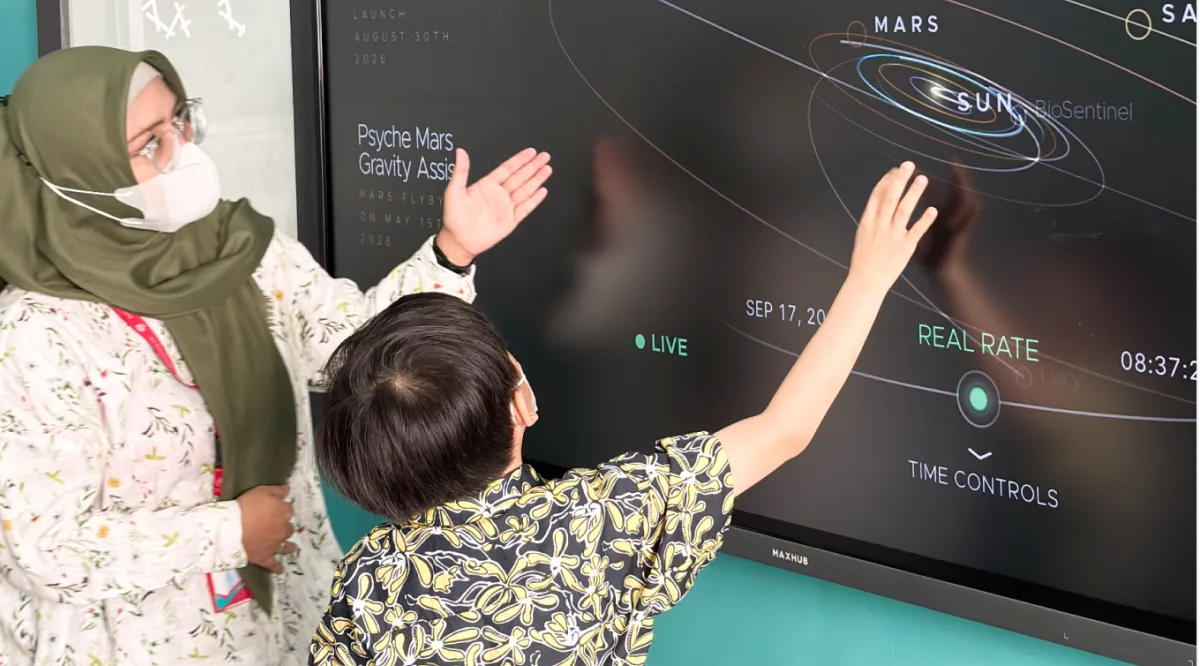
At SIS Palembang, we use the Interactive Flat Panel (IFP) as one of the tools to help students understand these ideas. Instead of only looking at pictures in their books, students can see models, move objects on the screen, and take part in activities during the lesson.
Learning Science by Seeing and Doing
We’ve noticed that students learn better when they can see and do things for themselves. When we learn about the planets, we use 3D models on the IFP. Students can come to the front, move the planets, and watch how Earth moves around the Sun. They can then share what they notice with the class.
We also like to ask students to make a prediction before we watch a video or simulation. “What do you think will happen?” This simple question gets them thinking before they see the answer. Sometimes they are right, and sometimes they are surprised. Either way, it gives us something interesting to talk about.
The IFP is also helpful when students are unsure about an answer. Instead of simply telling them, we can explore the idea together using the digital model.
Activities Students Enjoy
At SIS Palembang, we use the IFP in many of our science lessons. Students really enjoy activities where they can interact with what they are learning.
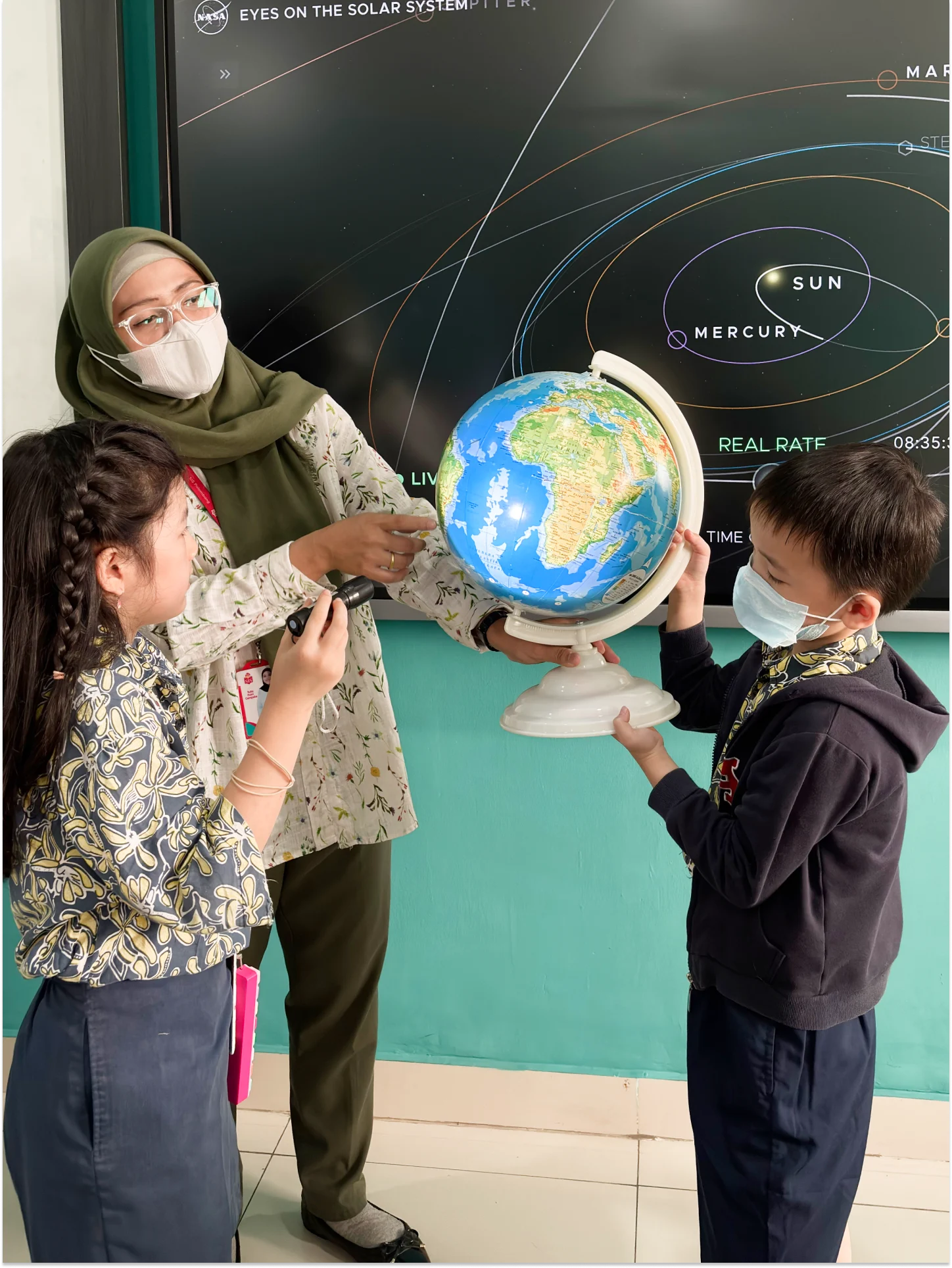
When learning about day and night, they can move the digital Earth and see which parts receive sunlight. We also use the IFP to explore the seasons, helping students see how Earth moves around the Sun.
Another activity students enjoy is sorting and exploring the planets. They can drag the planets into the correct order from the Sun and sort them into rocky planets and gas giants. They can also tap on each planet to see its surface, rings, and moons. It is always nice to see how quickly a simple activity gets the whole class involved.
For us, the best part is seeing students become curious, ask questions, and discover the answers for themselves
Keeping Students Involved
We do not use the IFP for every part of the lesson. We use it when a visual or interactive activity can make a concept easier to understand.
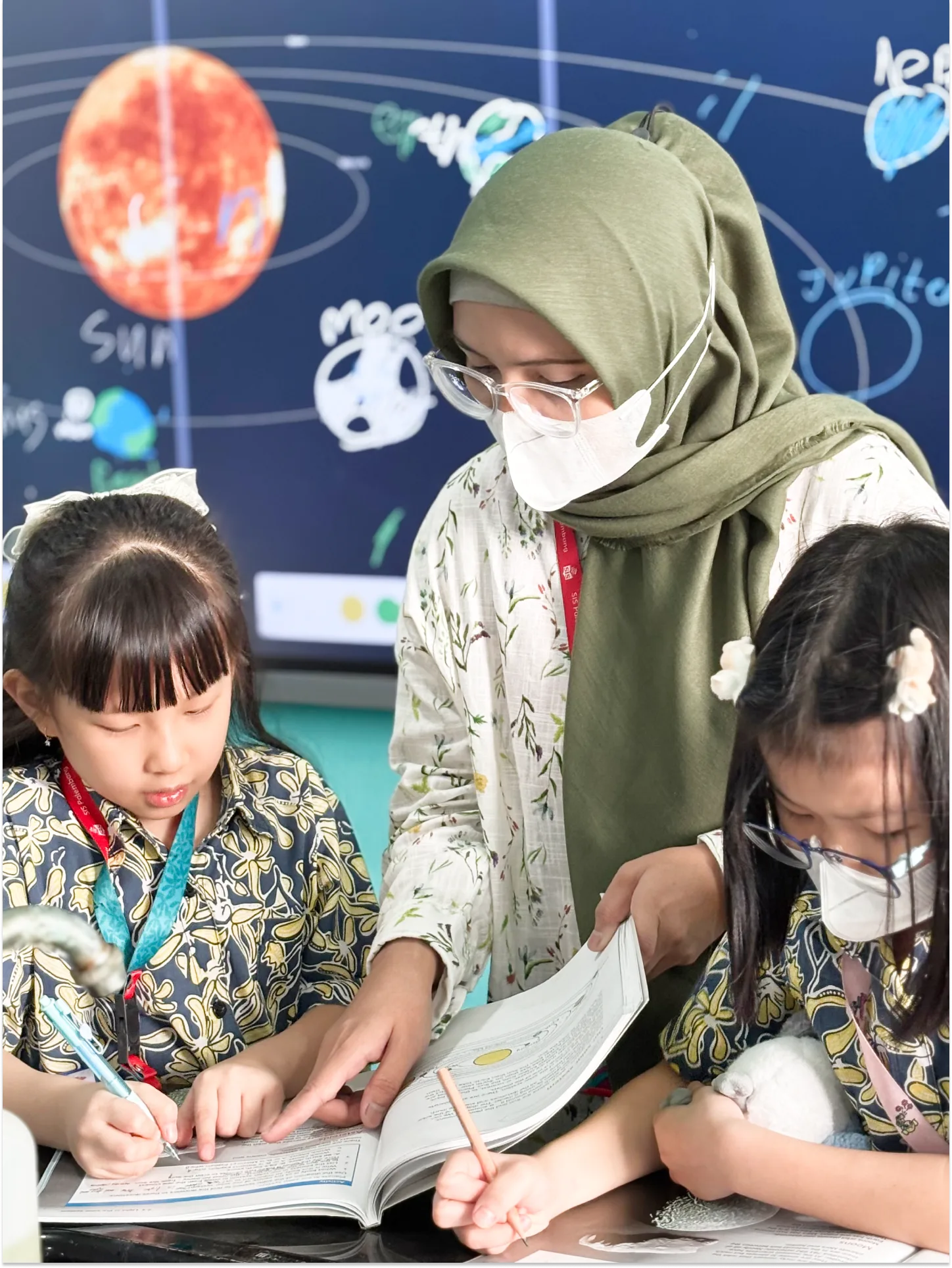
We usually combine activities on the screen with questions, discussion, and written work. After exploring a model on the IFP, for example, students may share what they noticed before writing down their ideas in their workbooks.
A short quiz or matching activity helps me check students’ understanding. But sometimes, the best learning starts with a simple question. We often ask, “What do you think happened?” or “What did you notice?” Their answers can lead to ideas and discussions that we did not expect.
What I Notice in My Students
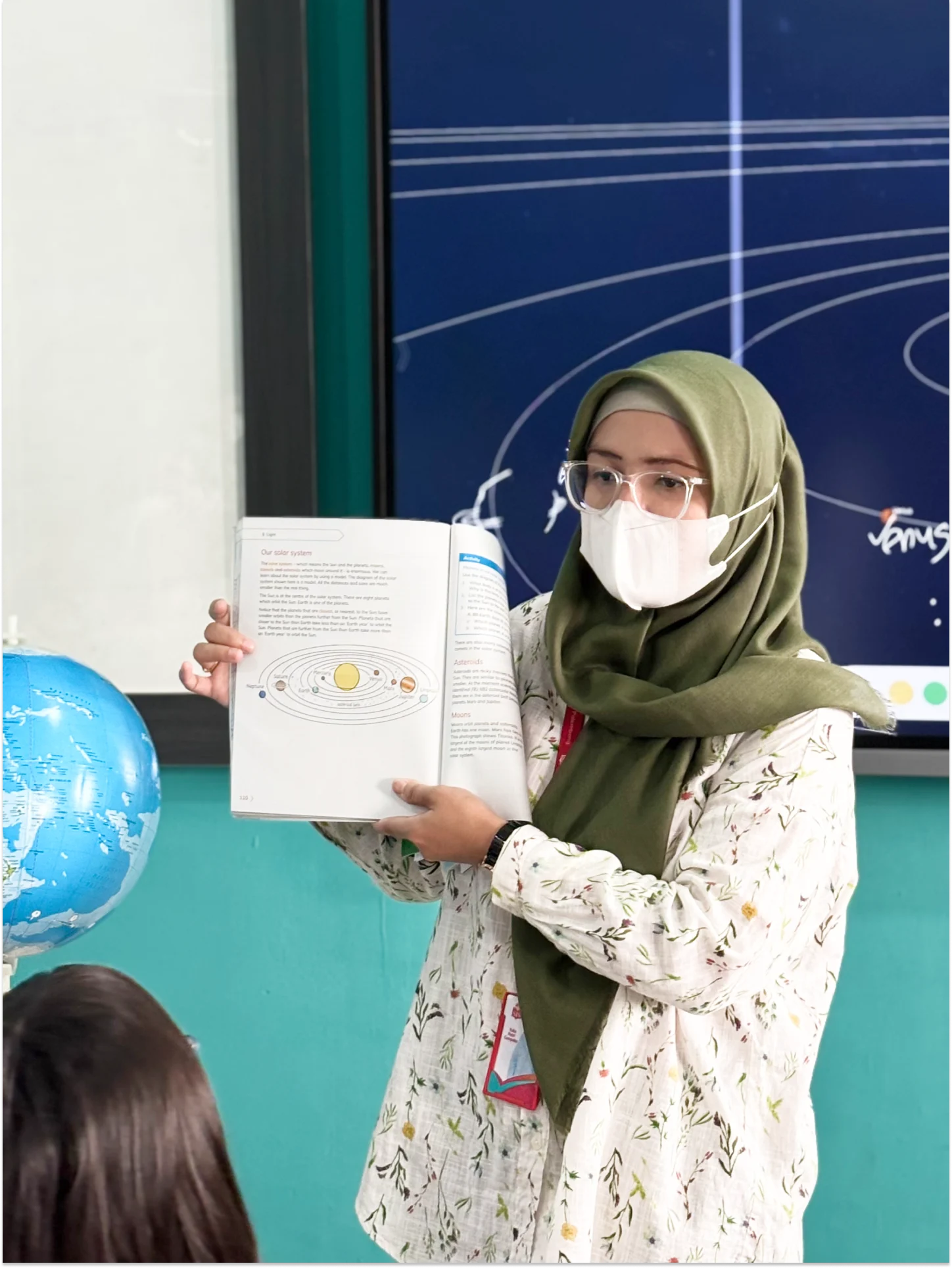
One of the biggest changes we notice is that students are more willing to participate when they can interact with the lesson. They are often excited to come to the front and say, “Can I try?” or “I want to move the Earth!” They also become more confident sharing their ideas.
The IFP does not replace hands-on learning or teacher guidance. It simply gives us another way to explore science, especially when something is too far away or difficult to see in real life.
At SIS Palembang, we are continuing to find simple ways to make Science lessons more interactive and meaningful. For us, as teachers, the IFP makes a difference when it helps students understand ideas that are not easy to see in real life. When they can explore these ideas for themselves, learning becomes more exciting.