
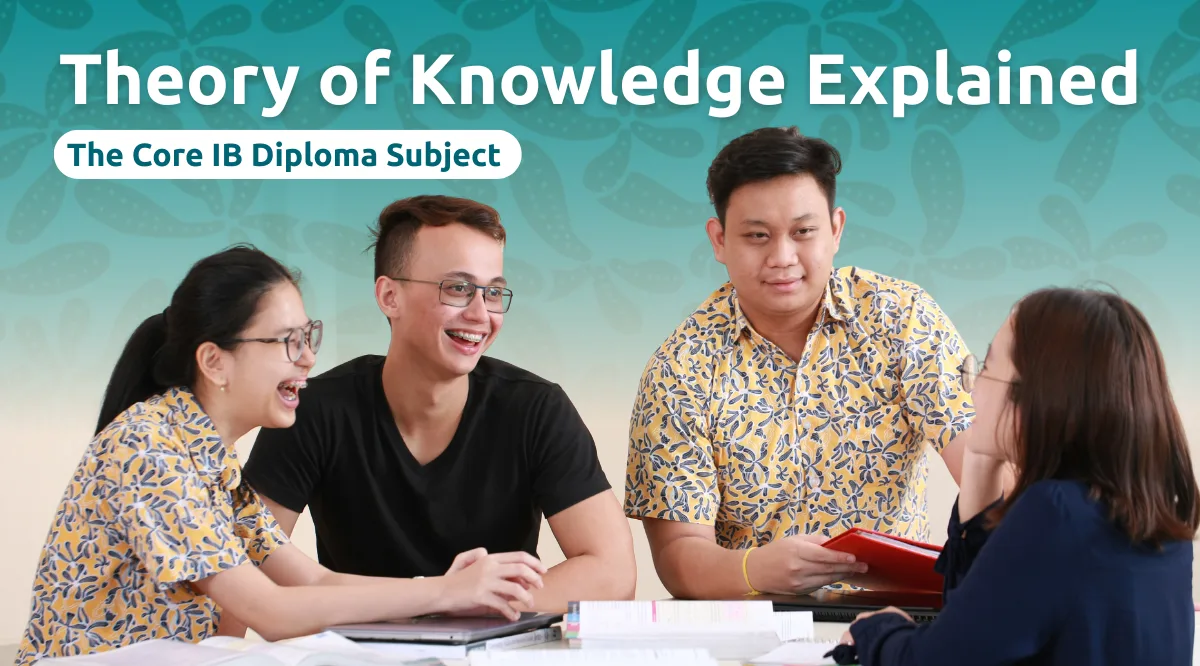
Theory of Knowledge Explained: The Core IB Diploma Subject
What if one subject could make every other subject your child studies more meaningful? Theory of Knowledge (TOK) does exactly that. A core component of the International Baccalaureate (IB) Diploma Programme (DP) at SIS Group of Schools, TOK is not about memorising facts or mastering a fixed body of content. It is about developing the one skill that underpins all learning: the ability to think critically about knowledge itself.
What is Theory of Knowledge?
TOK is a two-year course that sits at the heart of the IB Diploma. Rather than asking what students know, TOK asks how they know it. It invites students to explore how knowledge is produced, how it relates to our values, and how our understanding of the world changes over time.
How the Course Works
TOK is structured around three interconnected elements:
The Core Theme: Knowledge and the Knower
Students begin by examining their own relationship with knowledge. What shapes what they believe? What does it mean to engage with information critically and responsibly, rather than simply accepting it?
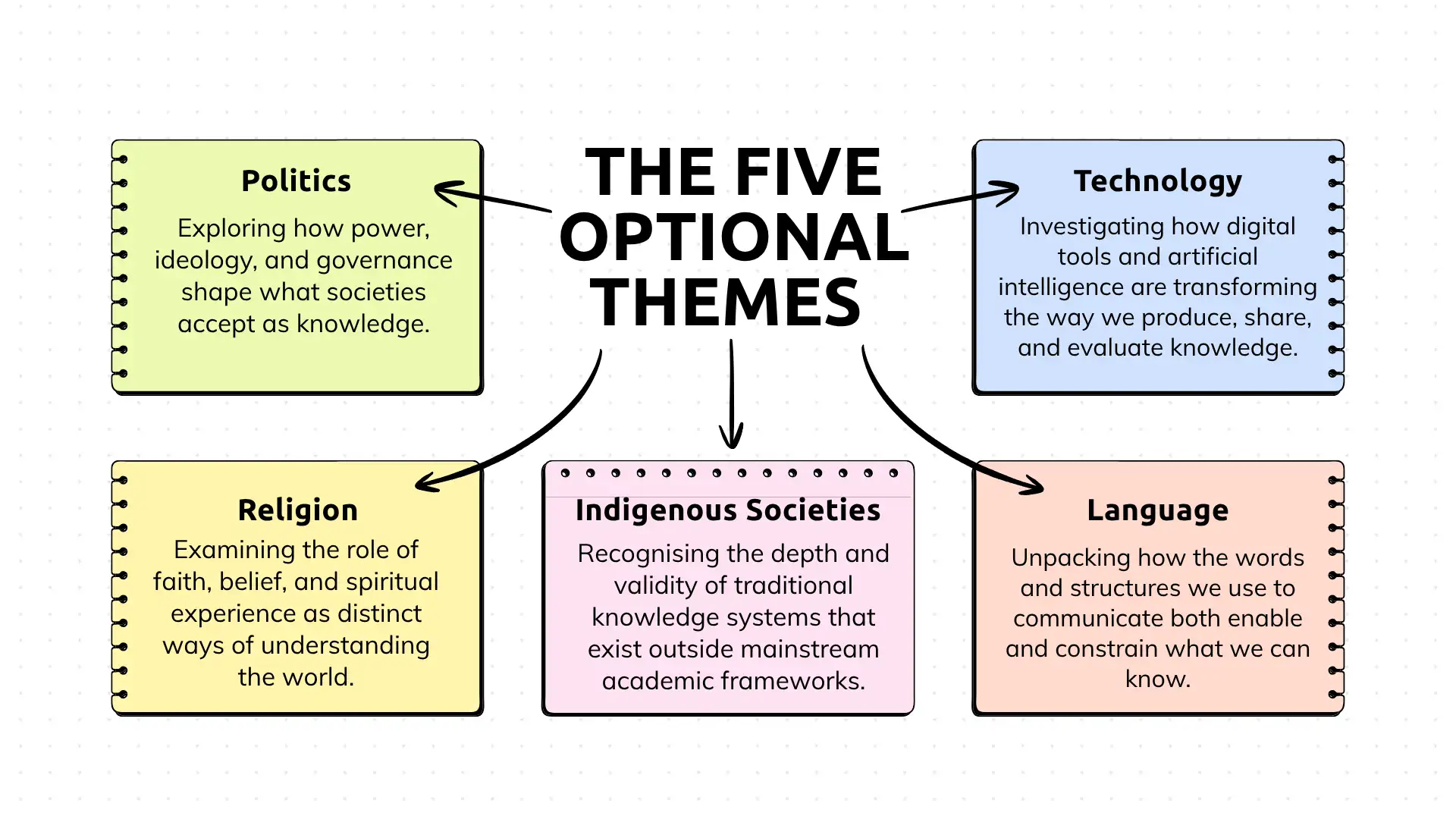
The Five Optional Themes
Students explore how knowledge operates across different areas of human experience.
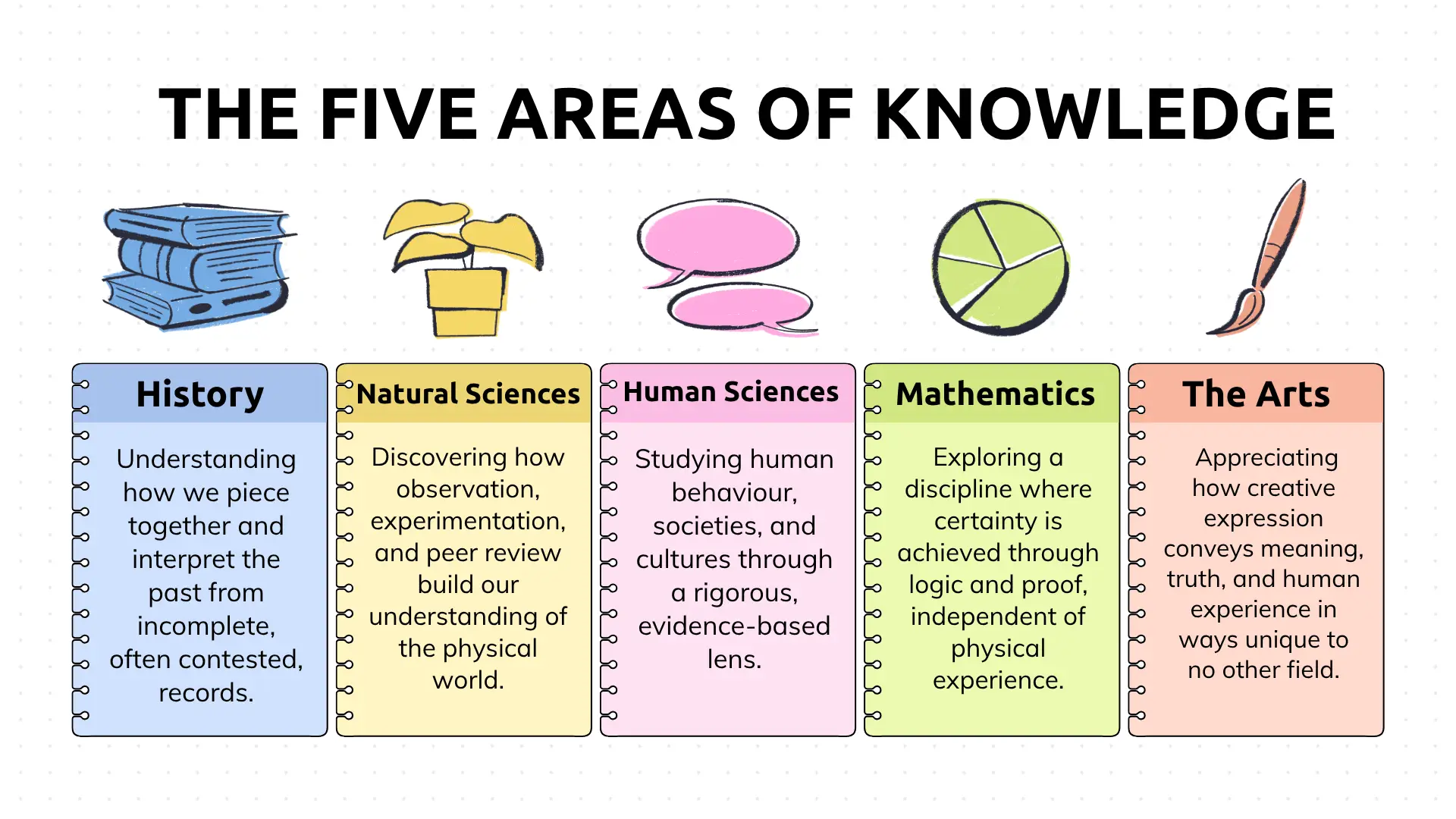
The Five Areas of Knowledge
Students examine how knowledge is built and validated across five disciplines:
How Students Are Assessed
TOK Exhibition — DP Year One
Students select one of 35 IB-prescribed prompts and respond through three real-world objects, each supported by a written commentary that connects the object to the prompt.
TOK Essay — DP Year Two
Students write a 1,600-word essay responding to one of six prescribed titles, typically explored through two of the five Areas of Knowledge.
The Skills Students Develop
TOK builds habits that extend far beyond the classroom and the Diploma:
- Evaluating claims by asking what evidence they actually rest on
- Recognising bias and understanding why a source may have a stake in being believed
- Constructing well-reasoned arguments while genuinely engaging with opposing views
- Navigating uncertainty with confidence and intellectual maturity
- Considering the role and nature of knowledge in their own culture, in the cultures of others, and in the wider world.
In an age where information is abundant but reliable knowledge is harder to discern, these skills are not just academically valuable — they are essential.
TOK at Singapore Intercultural School
TOK is built around discussion and enquiry rather than lecture, and that format comes alive in an internationally diverse school like SIS.
With a classroom of students from various cultural and national backgrounds, TOK prompts shift from abstract to real. Students contribute their lived experiences and perspectives, leading to a richer exploration of knowledge than in more homogeneous settings.
Universities consistently recognise TOK as one of the IB’s strongest indicators of a student’s capacity for independent thought. But the more lasting reward is simpler: students who leave SIS knowing not just what they know — but how and why they know it.
Interested in the IB Diploma Programme at SIS Group of Schools?
We invite you to visit our campus or speak with our Admissions Team to learn more about Theory of Knowledge and the full IB Diploma experience at SIS.
Contact our Admissions Team today — we would love to answer your questions.
Theory of Knowledge Explained is part of the Subject Spotlight Series, in which SIS Group of Schools takes a closer look at the distinctive subjects offered through our Cambridge and IB programmes. Stay tuned for the next article.