

Digital Learning in Post-Pandemic Era
Exploring Digital Learning Environment Post-Pandemic and Integrating It to Daily School Life
Intro
The appearance of education has fully changed because of the COVID-19 pandemic; it finally disclosed both the scale and the challenges connected to digital learning. The imposed change towards the online school explicated naïve integration, enabling the students to develop setups for online learning. As we step into the post-pandemic era, it now becomes very crucial to have an insight into the transformation in a digital learning atmosphere and to fit itself into everyday school life. The present article discusses the improvement in digital platforms for learning and takes on the challenge of the digital divide. It also discusses the future promise of blended learning models, which will seek to maintain the flexibility of online learning with the social and interactive benefits of face-to-face learning.
Assuredly, digital learning has comparatively become a powerful alternative to traditional classrooms in light of the advances witnessed with pressing times. Still, the digital divide exists as a fact, presenting a difficult challenge for ensuring equal rights in acquiring education among all the students. This action requires the efforts of not only the government and schools but also the private sector. Blended learning provides a good balanced approach to personally oriented learning experiences and the need for social interactions and collaboration. Through these developments, and by solving existing problems, a more inclusive, flexible, and educationally inclusive system will be feasible—superbly tailored to the individual needs of student clients and well-equipped for the realization of their life-offering aspirations in the future. The lessons learned through the pandemic provide a strong basis for developing a resilient, adaptive, and future-oriented education system.
The Evolution of Digital Learning Platforms
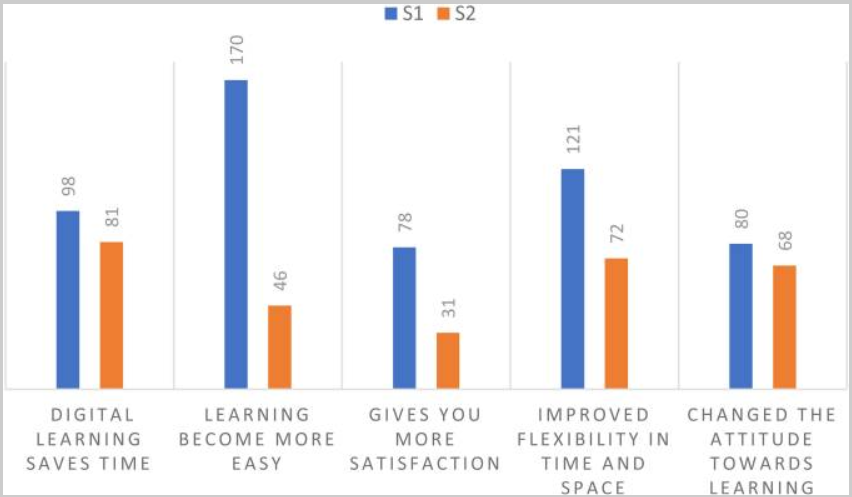
The Pandemic has been a catalyst for huge developments in digital learning platforms. Initially believed to be a temporary remedy, these learning platforms have evolved into complete alternatives to traditional classroom education. New technologies such as artificial intelligence-driven personalized learning, immersion virtual classrooms, and cutting-edge digital resources have significantly enhanced the process of knowledge delivery. According to a study by Gopika et. et al. 2023, before and after the pandemic, the result shows that more than 60% of the student participants feel satisfied or fully satisfied with digital learning.
Before the pandemic, online education was always strongly criticized because it is less active and provides less effective learning. However, now it is rapidly developing and adopting new technologies to solve most of these problems. Currently, AI-driven tools can automatically adjust learning to individual students to help understand and memorize better. An adaptive learning system would, for example, work by monitoring a student’s progress and then be able to respond with tailored content, keeping each learner working on their strengths and weaknesses in ways new to traditional classroom settings.
Virtual classrooms too have radical improvements with features near to recreating the physical classroom. The platforms offer features for real-time collaboration, including the breakout rooms for group work, interactive whiteboards, and instant polling. The teacher can follow any student’s engagement, give instant feedback, and trigger a discussion to keep the level of engagement high. There is also a recording option for learners to go through the materials again at their convenience, which enhances the learning and proper retention of key concepts.
Besides, it has been facilitated by the availability of numerous digital resources that enhance the learning process on the internet. For example, multimedia libraries with videos, simulations, and quizzes are to be developed on educational platforms in relation to different learning styles and learner preferences, hence making education more inclusive and effective. For instance, video tutorials might be applied by visual learners, while interactive simulations might be applied by kinesthetic learners, who are thus able to experiment and play around with a concept.
Case studies on digital learning successes like FVS and Khan Academy portray the potential of these platforms. FVS was modeled way before the pandemic and has a very well-established infrastructure catering to a variety of courses and even extracurricular activities. There is the all-round policy that caters to regular contact between the teacher and the student, good support systems for students with special needs, and a continuous system of improvement through feedback and data analysis. Proven to be quite successful, students from the FVS perform well continuously in the standardized tests and college admissions.
Khan Academy, however, has really shifted the concept of online learning by providing free high-quality resources to students around the world. Its individual learning dashboards trace the student’s progress and give recommendations on what to study next. It identifies areas in which students are struggling from data analytics, thus intervening in time to provide the necessary support and help as may be required. The success of Khan Academy lies in the democratization of education: people can get top-class learning if one has an internet connection.
Further enhancement has been achieved in online education with the adoption of social learning components. Up to date, some of the online avenues have social learning components in the fact that students can form groups and engage in doing assignments or peer reviews and even have discussion boards on a specific topic. Interactions have a significant role in gaining the level of cognitive, communication and teamwork skills, which is a necessity for one to do well in the modern times.
Thinking ahead, the lessons learned from these models of success will inform the development of online learning environments. It is in this adaptability and commitment to never-ending improvement that they find their roots of success. Through data analytics, constant steering by feedback streams from students and educators, staying alert to technological advances, the online education platforms will keep evolving to better meet shifting learner needs.
Mitigating the Digital Divide and Accessibility Divide
Digital divide, as starkly exposed by COVID-19, is indeed the inequality in access to technological tools and the internet. Extremely serious challenges are indicative of this gap regarding the equitable quality of education, in many cases leading to the lack of important resources to effectively take part in learning online by students from poor backgrounds.
It does not create a digital divide by simply going from no access whatsoever to devices or the internet and then problems of quality, connectivity, available devices for learning, or the digital literacy needed for the same. Studies have shown that there are discrepancies regarding access to reliable internet use, especially regarding students from rural and underserved urban areas. This very fundamental need, therefore, acts to undermine their capacity to attend virtual classes, finish assignments, and eventually access educational resources.
Mitigating comprises stakes from all sections: governments, institutions of learning, non-profits, and the for-profit private sector. It is through policies and funding programs that governments play a very critical role. For instance, the U.S. The Federal Communications Commission’s Emergency Broadband Benefit program has been serving low-income households by providing subsidized internet service. Of importance, this ensures that the ability of students to access online education does not become a financial burden on family livelihoods.
Thirdly, educational institutions can help by distributing devices among students who need them. Similarly, a lot of schools and colleges started lending laptops and tablets to students who did not have them. This kind of immediate response was indeed very instrumental for ensuring continuity in education. However, in search of finding long-term solutions, schools shall need to continue investing in technology and infrastructure that will sustain digital learning. Establishing community learning hubs with high-speed internet and digital devices can create safe and conducive environments for students to study and have access to online classes.
The private sector might also be involved by way of socially reciprocal businesses and collaborative agreements with institutions of learning. In this regard, technology companies can donate devices, provide reduced internet access, and offer training in the use of technology. A good example is that public-private collaboration can hugely extend program reach and, therefore, a more efficient and hence effective allocation of resources.
Another type of long-term solution has to do with the development of digital literacy in students and educators. This demands that teachers be trained with the necessary skills to leverage the potential for technology in supporting teaching and learning. Professional development should consist of practice in utilizing educational technologies and approaching ways students can work within virtual learning settings, as well as proper methods of assessment on the progress of each student online. Integrating digital literacy into the school curriculum will allow students to gain the knowledge and skills for effective navigation and utilization of online resources.
More importantly, being developed on inclusive online platforms for both students with imperative and varied learning needs as well. This notice goes out to students who are disabled by having content that is accessible, resources that are multilingual for non-native speakers, and, in addition to all that, designs that are manageable by students of all ages and with all different backgrounds. Inclusive design focuses on benefitting every student in its use of his/her education, no matter what.
Digital divide reduction initiatives should also consider the development of programmes and services that deal with the psychological and social dynamics associated with online learning. Most students coming from the margins of society have tremendous deficits of stressors, such as poor home conditions, that negatively impact their ability and desire to engage in any form of distance education. Student services, such as counseling, academic advising, and peer mentoring, can assist at-risk students in addressing the negative factors associated with online learning and to stay motivated.
For an educational landscape that is equitable, equipping schools becomes important to bridge twin divides— digital and physical accessibility. It is through policies, public-private partnerships, investment in digital technology, and the driving of digital literacy that students at all levels will be able to remain online in their educational pursuits. We remind ourselves through those lessons learned during the pandemic that a more collaborative perspective among various stakeholders in bridging the digital divide can achieve a more inclusive and resilient education system.
Hybrid Learning: The Road Ahead for Education
The post-pandemic time is a once-in-a-lifetime opportunity to assimilate digital learning into the traditional edifices of in-person learning and the many accompanying models of blended learning. This hybrid approach combines flexibility and resources from online education with increased sociability and interactivity from physical classrooms. Blended learning will create the overall education experience that would cater to the learning needs of every kind of student while solving some of the shortcomings emanating from either purely online or purely in-person instruction.
This, therefore, implies that blended learning bestows several advantages upon learners and educators. At the top of the list is the ability to experience customized learning. A personalized learning experience is easily achievable since the online components in the blend of learning give learners an opportunity to be at the driver’s seat—repeating sections they didn’t understand well and fast-forwarding when the information conveyed is perceived as easy to master. Such personalization ensures each student receives learning that meets his or her particular learning style and need. For instance, with some students having grasped the concept of the class easily and fast, they can then proceed forward, while others who still have not grasped it yet can do the work easily on their pace without feeling rushed.
Secondly, blended learning presents a very flexible opportunity in the way of accommodating learning styles in addition to schedules. Involving the three means flexibility not only in the learning environment but also in lifestyle obligations. Engagement in other activities, part-time work, or other obligations can be handled best with such flexibility. They may also do their online materials as well as take tests at their most convenient time, thus lessening the pressure put by fixed timetables. This feature may also be of help for the non-traditional student — adults returning to school and combining studies with work and family life.
A well thought out and implemented plan will only ensure the integration of online and off-line education. Appropriate strategies have to be developed that take the best of the strengths of both pathways. For instance, theoretical instructions could be delivered in an online environment through pre-recorded lectures, interactive simulations, and digital textbooks. In-person sessions can continue in those areas where group members need to experimentally apply what they are learning, work on hands-on activities, or collaborate on projects. That kind of a mix will take care of ensuring the development of deep insights into theoretical knowledge on one hand, but on the other hand, it will support the acquisition of practical knowledge and social competence from face-to-face interactions.
Directly related, teacher training becomes essential in guiding educators through this mix and making the most out of it. Professional development programs should focus on teaching strategies for online instruction, the use of digital tools and resources, and ways to engage students in a virtual environment. Educators also will have to be able to integrate on- and off-line components seamlessly to create a most cohesive and dynamic learning environment. This training will prepare teachers to manage a blended classroom, give personal feedback, and guide students in using the hybrid model.
However, challenges exist to implement a blended model of learning. The greatest challenge in such a case is the maintenance of the quality of education with both modes of delivery. It will be critical that schools set up clear standards borne out of best practices for online and in-person modes of instruction for higher educational quality. Regular assessment and feedback from students and teachers will help point out lacunae and in ensuring that the blended learning model continues to be vigorous and responsive.
Maintaining students’ interaction in a blended learning environment may also be challenging. A teacher must involve them in work through different strategies. students also engage by doing different interpersonal and group communication tasks, through the various gamified activities, and also by undertaking intentional collaboration. There are forums for discussions, virtual study groups, clarification about any help brought through regular communication with the students or encouragement.
Another important logistical challenge for the adoption of blended learning models is overcoming issues related to logistics. Schools have to ensure that every student has access to technology and the resources for effective use. The planning for scheduling face-to-face sessions and managing classroom space to allow for social distancing and other health protocols is detailed.
Such challenges can be faced, and a productive and transparent blended learning environment created by having a collaborative effort from the educator, policymaker, and technology provider. Policymakers can support through funding, policy frameworks, and infrastructure developers. Technology providers provide their innovative tools and platforms to bring about a classroom learning environment. From the educators, blended learning is designed with expertise in effective strategy and insight.
Conclusion
- Harness technological advances for digital learning platforms with the use of AI-driven personalized learning tools, include interactive virtual classrooms, and make available fully digital resources.
- Address issues in accessibility by implementing policies of equity in access to technology, distributing devices with reliable internet connectivity, and developing online platforms inclusive of the divergent learning needs of students.
- Embrace blended learning models that look toward bringing together flexibility online education can offer with socialization in a physical space.
- Tailor learning experiences based on individual students and maintain high-quality education across online and offline modes.
- Learning: Bring the lessons learned during the pandemic into educational strategies.
- Prepare: Adaptable hybrid models deployed to be ready for such disruptions.
- Innovate: Make continuous improvement and innovation across the learning experiences.
- Collaborate: Work hand-in-hand with educators, policymakers, and technology providers for betterment.
- Continuously assess: and run feedback loops until results are assured in a better way.
- Provide teacher training: to effectively execute blended learning with their students.
Learn more about how we integrate digital learning and offline school for maximizing your children’s potential!
Hamdan Bin Mohammed Smart University. https://www.hbmsu.ac.ae/rise-of-online-learning-in-post-pandemic
Gopika, J.S. et. al. (2023). Awareness and Use of Digital Learning Before and During COVID-19. International Journal of Educational Reborn. https://www.ncbi.nlm.nih.gov/pmc/articles/PMC10183331/